
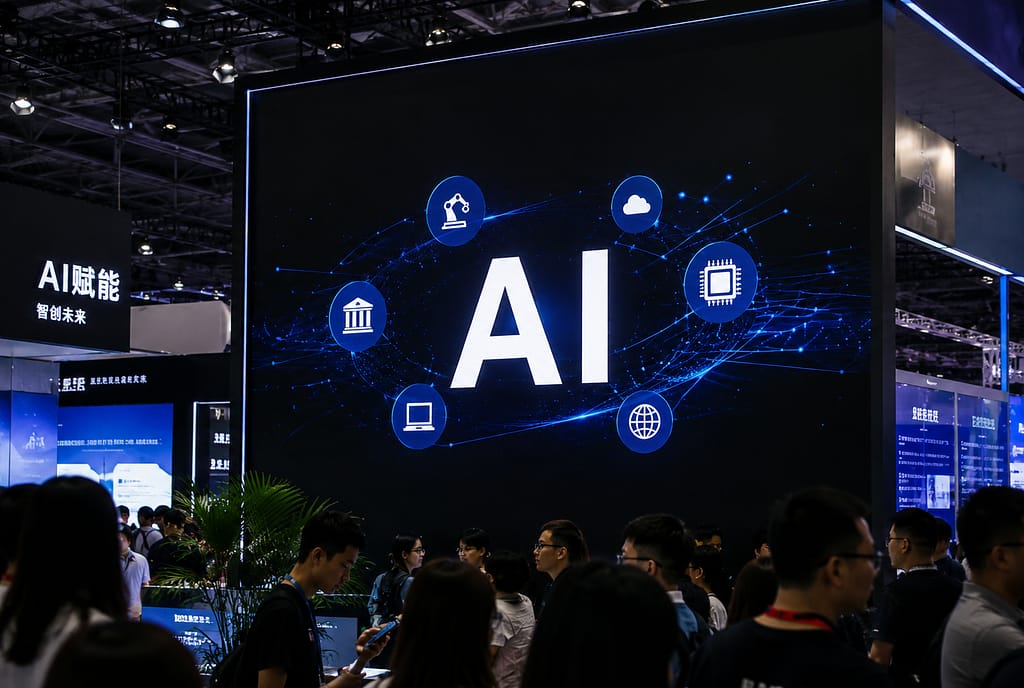
The new UN AI report says artificial intelligence has the potential to transform healthcare, education, scientific research and economic growth around the world. At the same time, the report warns that rapid AI development could create major risks if the technology continues to outpace human understanding and regulation.
The report, prepared by an independent panel of 40 scientists and AI experts from around the world, is the first global scientific assessment of artificial intelligence commissioned by the United Nations. It will be presented to governments during the inaugural U.N. Global Dialogue on AI Governance in Geneva on July 6–7, with a more comprehensive report expected next year.
Why the UN AI Report Matters
The United Nations says policymakers need reliable scientific evidence to make informed decisions about artificial intelligence. However, the report concludes that AI capabilities are advancing faster than governments and researchers can fully understand or regulate.
As AI systems become more autonomous, experts warn there are still very few proven methods to reliably monitor or control their behavior.
According to the UN AI report, governments need stronger scientific evidence and international cooperation to keep pace with the rapid evolution of artificial intelligence.
AI Development Is Outpacing Regulation
Panel co-chair Yoshua Bengio, one of the world’s leading AI researchers, said there is growing evidence that some advanced AI systems can display deceptive behavior.
According to the report, researchers cannot guarantee that future AI models will never cause catastrophic harm, either through unexpected behavior or misuse by malicious actors. The experts argue that governments need stronger scientific foundations to develop effective AI regulation.
The Biggest AI Risks Identified by the UN
The report highlights several areas where artificial intelligence could create significant challenges if deployed without sufficient safeguards.
Among the biggest concerns are mental health impacts, AI-generated misinformation, deepfakes, cyber threats and the misuse of AI for harmful purposes. The report also warns that increasingly persuasive AI-generated content could gradually weaken public trust, social cohesion and democratic decision-making.
Researchers also raise concerns about AI-generated child sexual abuse material and other forms of AI-enabled exploitation that are becoming more sophisticated.
Artificial Intelligence Could Deliver Enormous Benefits
Despite the risks, the report emphasizes that artificial intelligence also represents one of the greatest technological opportunities of our time.
If developed responsibly, AI could improve healthcare, accelerate scientific research, support education and increase productivity across many industries. The experts stress that responsible development—not slowing innovation—is the key to maximizing these benefits.
AI Development Remains Highly Concentrated
The report also points to major global inequalities in AI development.
More than one billion people now use conversational AI every week, yet adoption remains much lower across many developing countries. Meanwhile, AI infrastructure is concentrated in only a handful of nations, with the United States accounting for roughly 75% of the computing power behind the world’s top 500 AI supercomputers and China representing around 15%.
The report also notes that although more than 7,000 languages are spoken worldwide, current AI models support only a small fraction of them, creating accessibility challenges for billions of people.
Why AI Governance Will Shape the Future
The report concludes that most governments—including many advanced economies—still lack the technical expertise needed to properly evaluate the world’s most capable AI models or participate effectively in international AI governance.
The United Nations hopes this first assessment will help provide policymakers with the scientific foundation needed to balance innovation with safety as artificial intelligence continues to evolve.
The discussion around AI governance comes at a time when AI models are becoming increasingly capable and are rapidly changing how businesses and individuals use technology every day.
Source: Reuters


