
Artificial intelligence is quickly becoming one of the most important technologies shaping the global economy. But while companies continue investing billions into AI, central banks are starting to ask a different question: what happens if those expectations don’t match reality?
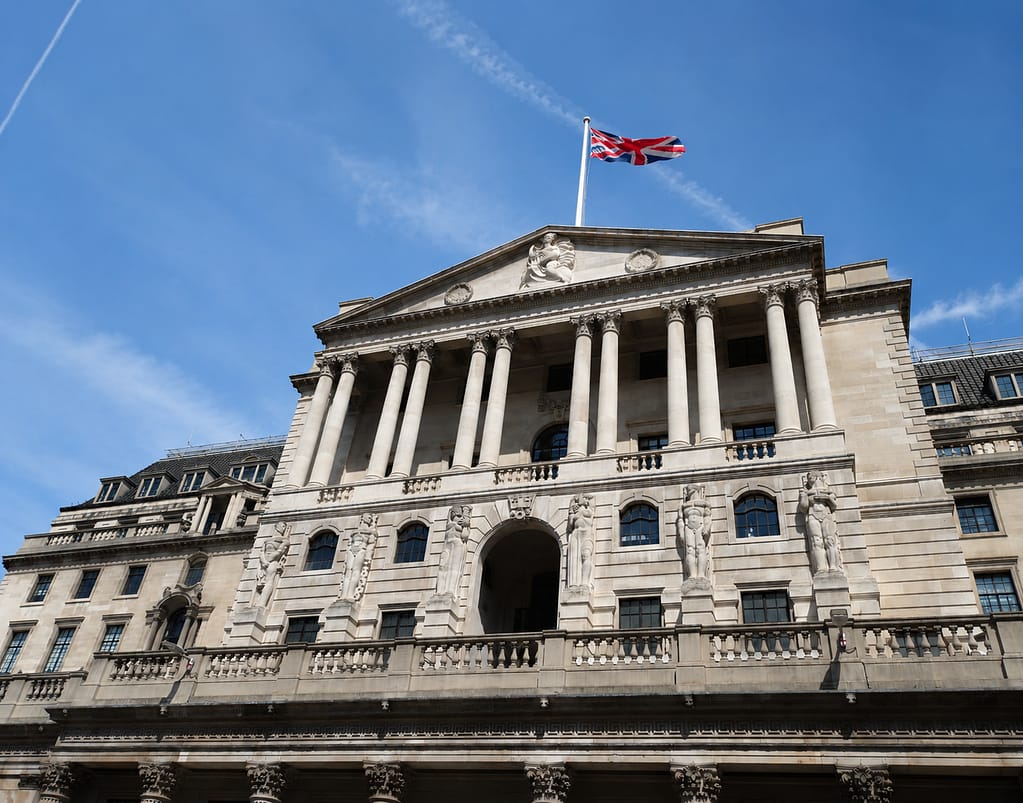
That is exactly the concern raised this week by the Bank of England. In its latest Financial Stability Report, the central bank warned that AI is creating new risks for financial markets, banks and investors, even as it continues to offer enormous economic potential.
The warning isn’t about AI suddenly causing a financial crisis. Instead, officials are concerned that rapid investment, heavy borrowing and growing dependence on AI could make the financial system more vulnerable if something goes wrong.
Why Is the Bank of England Worried About AI?
One of the biggest concerns is the enormous optimism surrounding AI.
Investors have poured significant amounts of money into AI companies, while businesses developing AI models and infrastructure continue raising billions to fund new data centers, chips and cloud services.
According to the Bank of England, those investments depend on several assumptions becoming reality. AI must deliver widespread commercial success, companies need to generate sustainable profits, infrastructure projects have to be completed successfully, and financing must remain available.
If those expectations change, financial markets could react quickly.
The central bank warned that falling confidence in AI-related companies could trigger sharp declines in stock prices, especially because many investors currently hold similar positions and some are using borrowed money to increase their exposure.
How AI Could Affect Financial Stability
The Bank of England also highlighted the growing amount of debt tied to the AI industry.
Building advanced AI systems requires enormous investment in computing infrastructure. Companies are spending heavily on GPUs, data centers, networking equipment and cloud capacity, often relying on significant borrowing to finance those projects.
If future revenues fail to meet expectations, some businesses could struggle to support those debt levels. At the same time, limited transparency around how some companies finance their expansion could make it harder for investors to accurately assess the risks.
While none of this suggests an immediate crisis, the central bank believes these vulnerabilities deserve closer attention as AI adoption accelerates.
AI Is Creating New Risks for Banks
Beyond financial markets, AI is also changing how banks manage operational and cybersecurity risks.
Artificial intelligence has the potential to strengthen fraud detection, automate routine operations and improve security systems. However, the same technology could also help cybercriminals develop more sophisticated attacks.
The Bank of England said it remains unclear whether AI will ultimately give a greater advantage to defenders or attackers.
Financial institutions are also expected to update software more frequently as AI systems evolve. Although these updates improve security, they can also increase the risk of technical failures or operational disruptions if not implemented carefully.
Why Regulators Are Paying More Attention to Agentic AI
Another growing concern involves agentic AI systems capable of making decisions and taking actions with limited human supervision.
Earlier this year, Bank of England Deputy Governor Sarah Breeden suggested that existing regulatory frameworks were never designed for autonomous AI agents.
As these systems become more capable, relying on humans to approve every action may no longer be practical. That means financial regulators will likely need new rules designed specifically for AI systems operating with greater independence.
The discussion reflects a broader shift among regulators worldwide, who are increasingly treating advanced AI as a technology that could influence financial stability rather than simply improve productivity.
This follows similar concerns raised in a recent United Nations report, which warned that AI development is advancing faster than governments can effectively regulate.
What This Means for the Future of AI
The Bank of England stressed that the UK’s banking sector remains resilient, and it is not predicting an immediate financial crisis.
Instead, the report serves as an early warning that AI is becoming deeply connected to the global financial system. As investment continues to grow and AI becomes embedded across banking, markets and critical infrastructure, regulators believe understanding these risks now is far easier than responding after problems emerge.
For years, conversations about AI focused mainly on innovation and economic opportunity. Today, central banks are adding another perspective to that discussion: ensuring the financial system remains stable as AI becomes one of the world’s most influential technologies.


