
Google has spent years building some of the world’s most advanced artificial intelligence systems. It helped create many of the technologies that power today’s AI revolution, including the Transformer architecture that made tools like ChatGPT, Claude, and Gemini possible.
But this week, the company lost one of its most important AI researchers.
Noam Shazeer, one of the co-authors of the groundbreaking 2017 Transformer paper and a key leader behind Google’s Gemini project, is leaving Google to join OpenAI.
On the surface, this may look like just another executive changing jobs.
In reality, it could be a sign of something much bigger.
The battle for AI talent is becoming one of the most important races in technology.
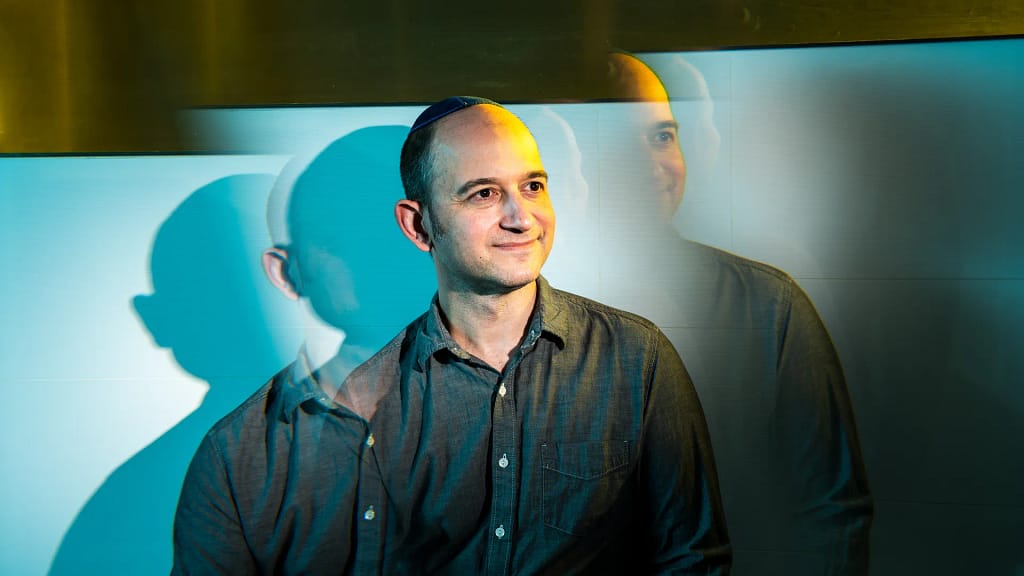
Who Is Noam Shazeer?
Most people have never heard of Noam Shazeer, yet his work helped shape the modern AI industry.
Shazeer was one of the researchers behind Google’s famous Transformer paper, published in 2017. The paper introduced a new approach to artificial intelligence that would later become the foundation for large language models.
Without Transformer technology, products like ChatGPT, Claude, Gemini, and many other AI systems might not exist in their current form.
After leaving Google, Shazeer co-founded Character.AI, one of the fastest-growing AI startups in the world. In 2024, Google paid roughly $2.7 billion in a deal that brought Shazeer and parts of the Character.AI team back into the company.
Now, less than two years later, OpenAI has managed to recruit him.
Why This Matters
The AI industry often looks like a battle between companies: Google versus OpenAI, Meta versus Anthropic, and Microsoft versus everyone else.
But behind every AI model is a relatively small group of researchers, engineers, and scientists. The reality is that AI talent is extremely rare.
There are thousands of software engineers around the world, but far fewer people capable of helping build the next generation of frontier AI systems. As a result, competition for these individuals has become incredibly intense.
Companies are investing billions of dollars into chips, data centers, cloud infrastructure, and research labs. But none of those investments matter if they cannot attract the people capable of building breakthrough AI systems.
The Real Story Is The Talent War
The most interesting part of this story isn’t that Noam Shazeer changed employers. The real story is what it says about the current state of the AI industry.
For years, companies competed for users. Today, they are competing for researchers.
The biggest AI firms are aggressively recruiting top talent from one another, offering compensation packages worth tens or even hundreds of millions of dollars. In some cases, researchers are becoming as valuable as professional athletes or superstar CEOs.
That may sound extreme, but when a single breakthrough can influence products used by hundreds of millions of people, the economics begin to make sense.
The company that attracts the best minds may gain a significant advantage in the race toward more capable AI systems.
What This Means For Google
Google remains one of the strongest AI companies in the world. It has world-class researchers, enormous computing resources, and some of the most advanced AI models available today.
However, perception matters. When a high-profile researcher leaves for a direct competitor, investors notice, employees notice, and the industry notices.
Every departure raises questions about where the most ambitious AI researchers want to work and which companies they believe have the strongest vision for the future.
One researcher will not determine the outcome of the AI race. But a pattern of departures could become a problem for any company, including Google.
What Happens Next?
The AI race is often described as a competition between models: GPT versus Gemini, Claude versus everyone else.
But the next phase may look very different. Instead of focusing only on products, companies may increasingly compete for the people capable of creating the next breakthrough.
The winners of the AI era won’t just be the companies with the most powerful computers. They will be the companies that attract and retain the most talented researchers.
And that’s why Noam Shazeer’s move to OpenAI is about much more than one person changing jobs. It may be another sign that the battle for AI talent is only getting started.
Final Thoughts
The AI industry is entering a new phase. Computing power matters, data matters, and money matters.
But talent may matter more than anything else.
As OpenAI, Google, Meta, Anthropic, and other AI leaders continue to compete for the brightest minds in the world, the companies that win the talent war could ultimately shape the future of artificial intelligence itself.
Related: Read more AI News on YouPromptAI.


One Comment