
delayed OpenAI GPT-5.6 public launch following U.S. government request
OpenAI GPT-5.6 is the company’s latest frontier AI model, but its public launch has been delayed after the U.S. government requested early access to review the technology before a broader release.
Instead of launching immediately to all users, the company is initially providing access to a small group of carefully vetted partners whose identities have also been shared with U.S. authorities. According to OpenAI, the decision is temporary and is intended to support the development of a broader framework for future frontier AI releases.
Why is the U.S. government involved?

The request reflects growing concern in Washington over the rapid advancement of artificial intelligence and the potential risks associated with increasingly capable AI models.
Government officials want to evaluate frontier AI systems before they reach the public, looking for potential cybersecurity threats, military applications, and other national security concerns. The goal is to identify possible risks before these powerful models become widely accessible.
Earlier this month, President Donald Trump signed an executive order creating a voluntary process that allows AI developers to submit advanced models to the U.S. government for review for up to 30 days before broader deployment.
OpenAI supports safety—but has concerns
OpenAI says it is cooperating with the government during this initial phase while emphasizing that the current approach should remain temporary.
CEO Sam Altman commented on X that extensive safety testing is reasonable, but expressed concern about government involvement in deciding which organizations receive early access to the technology.
The company also warned that making this type of review a permanent requirement could slow innovation and restrict access for developers, businesses, cybersecurity professionals, researchers, and international partners who rely on advanced AI systems.
Meet the openai GPT-5.6 model family
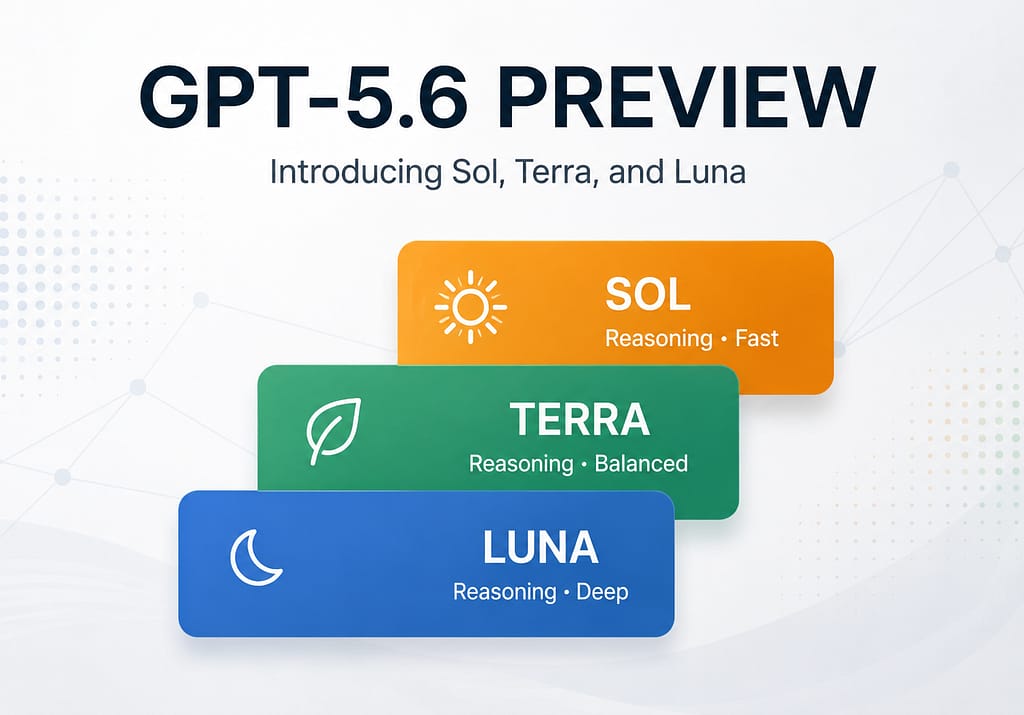
The new release includes three different models designed for different workloads:
- GPT-5.6 Sol – OpenAI’s flagship and most advanced reasoning model.
- GPT-5.6 Terra – a balanced model intended for everyday enterprise and developer use.
- GPT-5.6 Luna – a faster and lower-cost option optimized for lightweight AI workloads.
OpenAI says the limited rollout will allow additional testing and close collaboration with selected partners before making the models more broadly available.
A broader trend in AI regulation

The GPT-5.6 delay comes shortly after the U.S. government also pressured Anthropic to suspend access to some of its most advanced AI models for foreign nationals, citing national security concerns.
These developments suggest that governments are beginning to treat frontier AI models less like traditional software releases and more like strategically important technologies that may require oversight before public deployment.
As AI systems become more powerful, balancing innovation with security is likely to become one of the biggest challenges facing both governments and AI companies in the years ahead.
Final thoughts about OpenAI GPT-5.6
OpenAI’s delayed rollout of GPT-5.6 marks another sign that advanced artificial intelligence is entering a new phase of regulation. While the company believes temporary government collaboration can improve safety, it also warns that excessive oversight could slow innovation and limit access to some of the world’s most advanced AI technologies.
How governments and AI companies navigate this balance may shape the future of artificial intelligence far beyond the launch of GPT-5.6.


